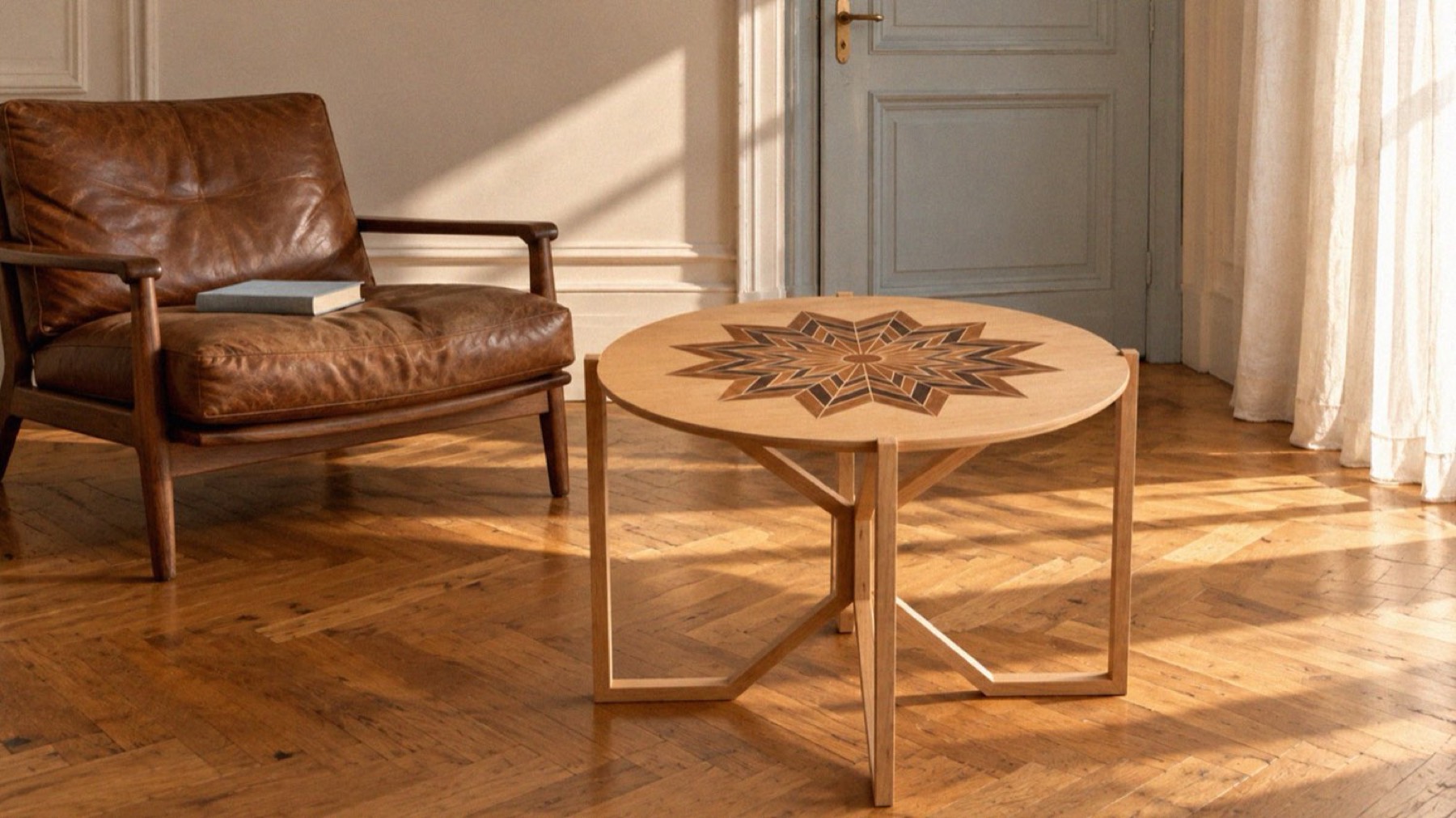
Traditional Macedonian embroidery carries generations of cultural identity in its geometry, patterns and craftsmanship. I grew up surrounded by it. For ROOTS, I wanted to find out whether those visual principles could become something more than decoration.
Could heritage shape the construction of a contemporary object?
Starting with research
The project began with research into Macedonian embroidery and the Ethno Clash design approach. I studied how the patterns are built: their symmetry, their repetition and the way simple stitches grow into complex stars and borders.
That research informed twelve initial concepts.
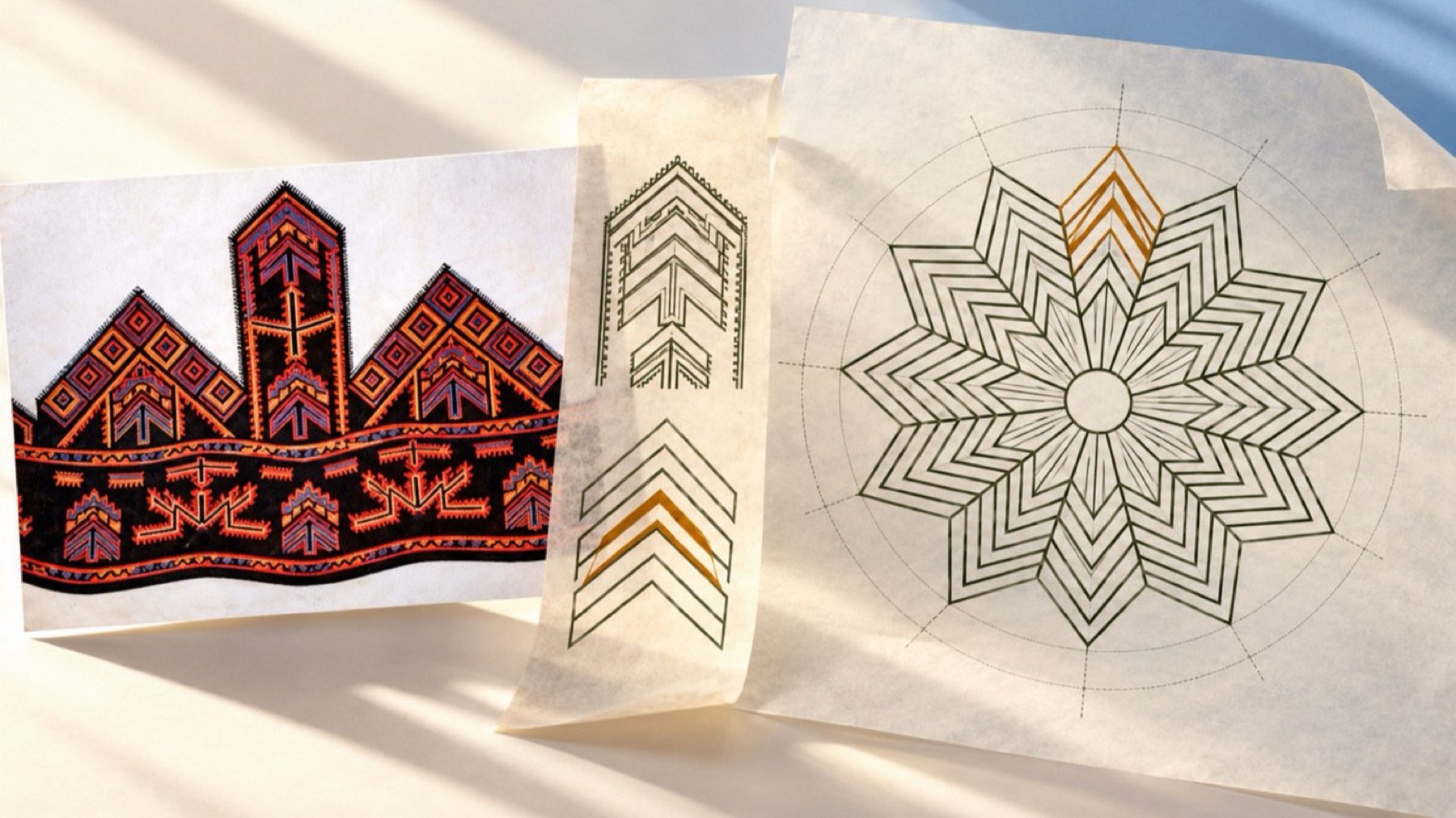
Flat, then form
Through sketching, geometric exploration and CAD modelling, I explored how a two-dimensional pattern could become a functional three-dimensional structure. The selected concept was refined into a physical prototype with CNC-cut wooden components.
Heritage wasn't applied to the object. It helped define it.
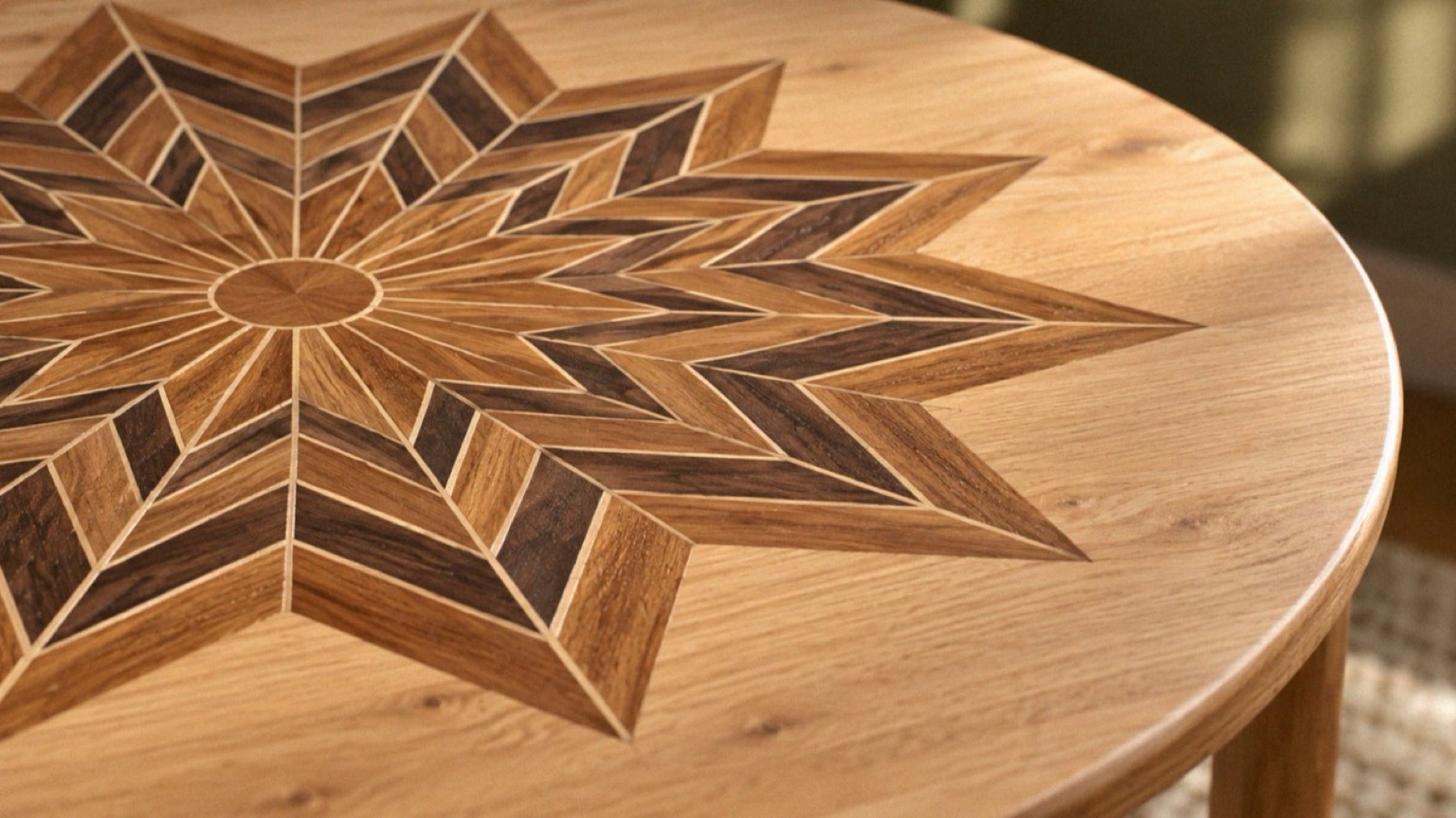
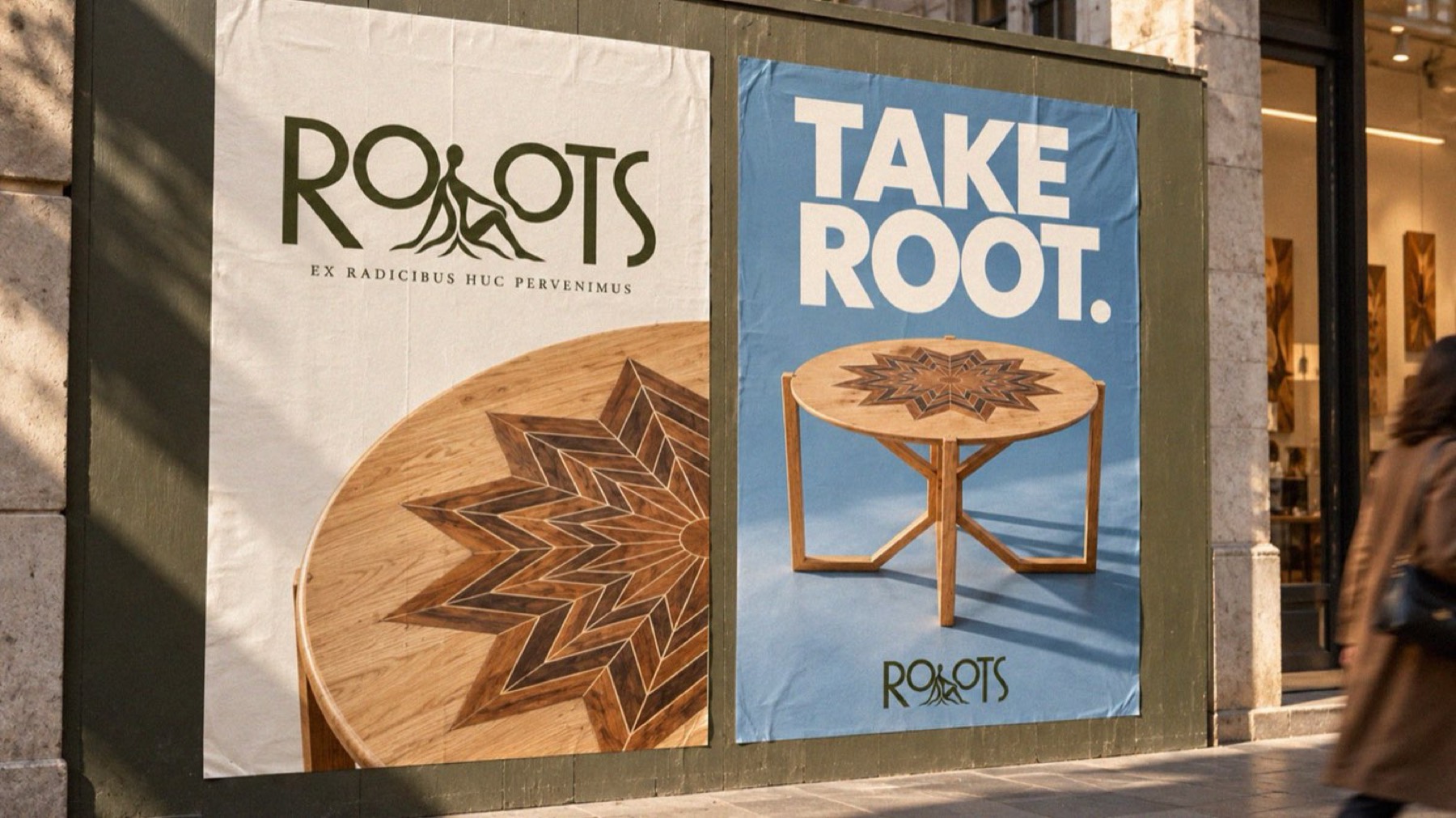
Rather than printing a pattern onto a surface, the embroidery became the logic of the table itself. The star on the top and the geometry of the legs come from the same source.
The story didn't end at the table
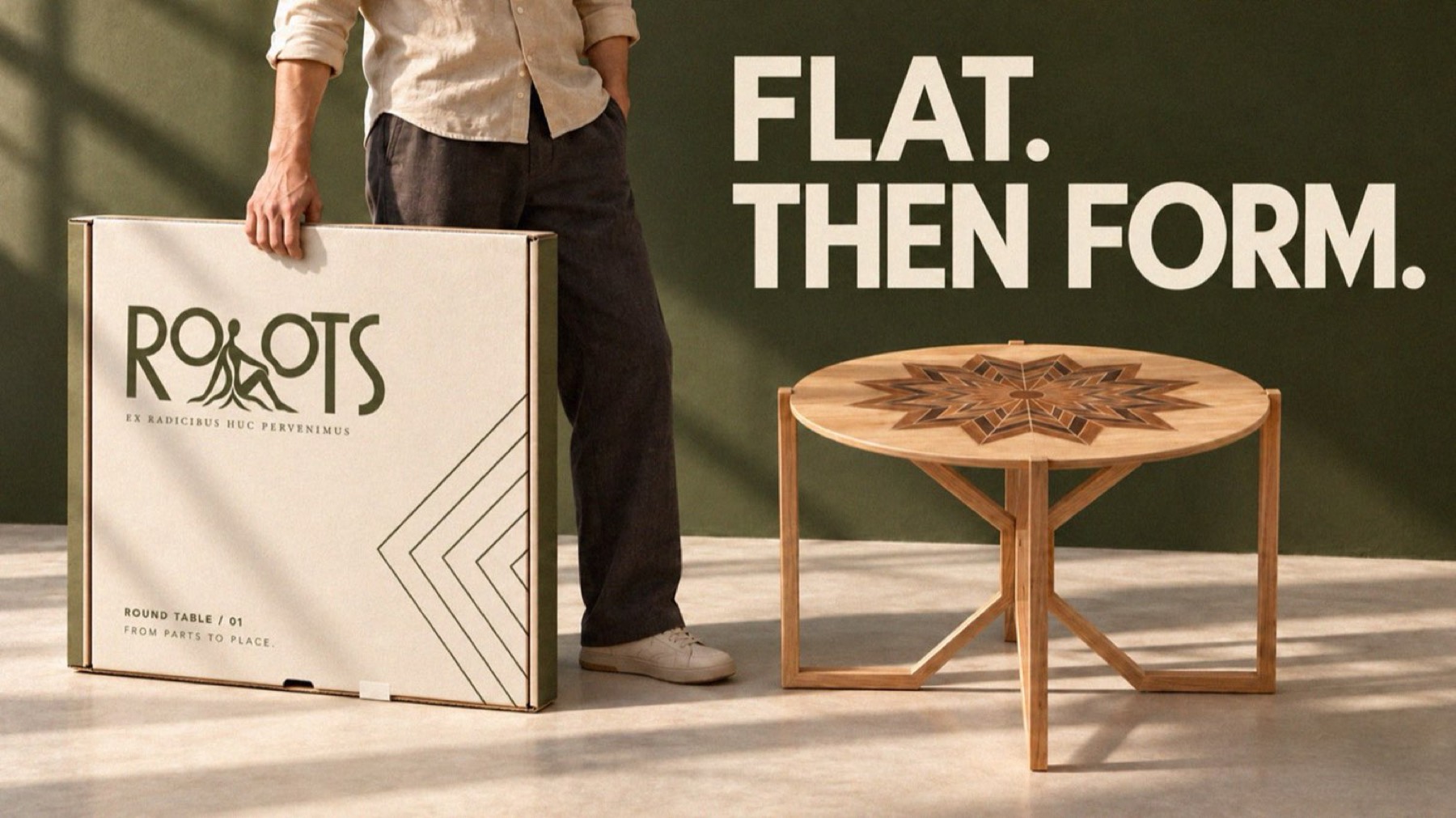
The design grew beyond the product. I developed a visual identity and packaging concept that carried the same geometric principles into the brand's graphic language, so the table, its box and its posters all speak with one voice.
Recognition
In 2020, ROOTS was featured in Imagination >> DESIGN << Technology, a publication showcasing industrial design student projects from the Faculty of Mechanical Engineering at Ss. Cyril and Methodius University in Skopje.
For me, ROOTS shows how research can move beyond inspiration and become a complete design process, from the first investigation to a physical object and its visual identity. A contemporary design, rooted in cultural memory.